Water Code

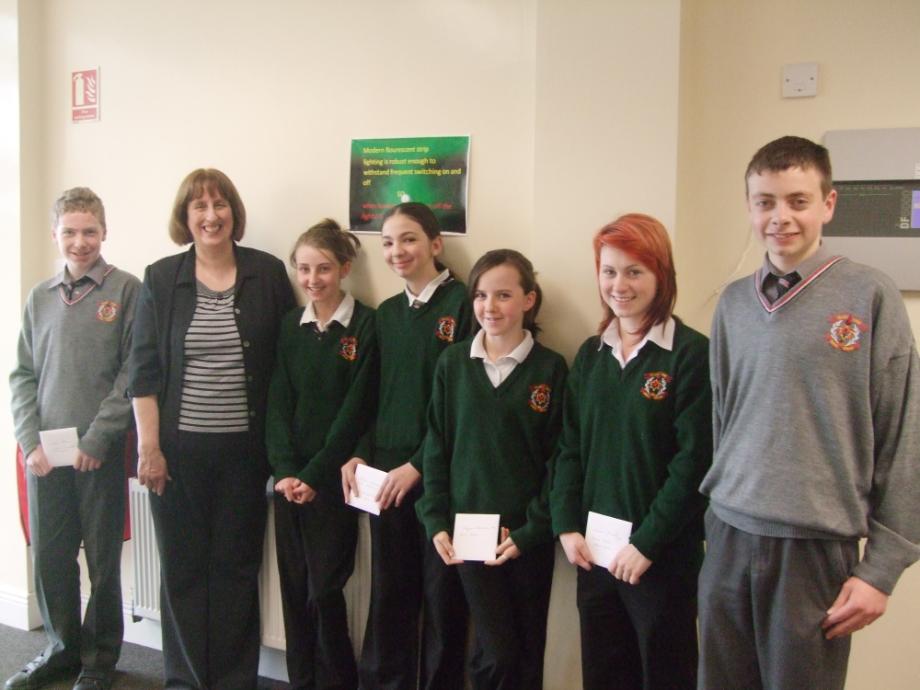
We ran a competition to get our new water slogan. We announced that we were holding the competition over the intercom and the entries started flooding in. We then went through all entries at our meeting and picked the best three. The two first place winners both won a €20 voucher and the other finalists won an Easter egg.
The winning slogan was “Only use enough to clean your stuff!”
The runners up were:
“Put a stop to the drop, don’t waste it, just taste it!”
“Save the nation from de-hydration”
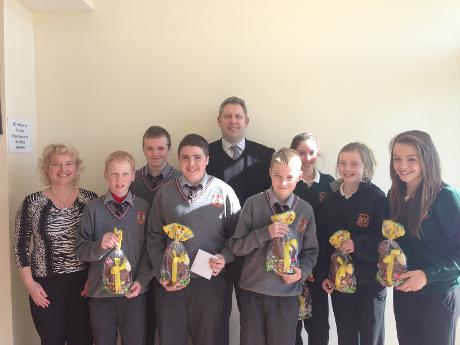
These are all the winners from our competition for a slogan.
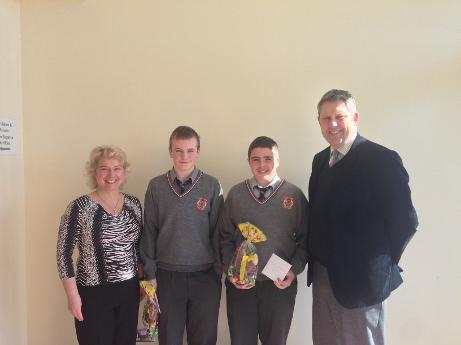
The two first place winners after receiving both of their prizes
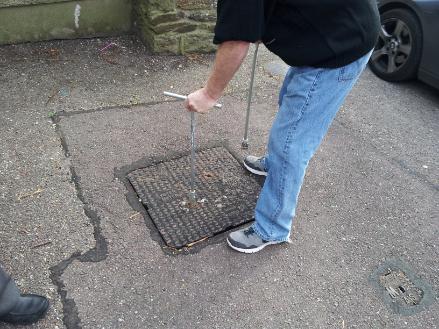
Water Meter Readings
We took a number of water meter readings to assess our water consumption at different times during the day.
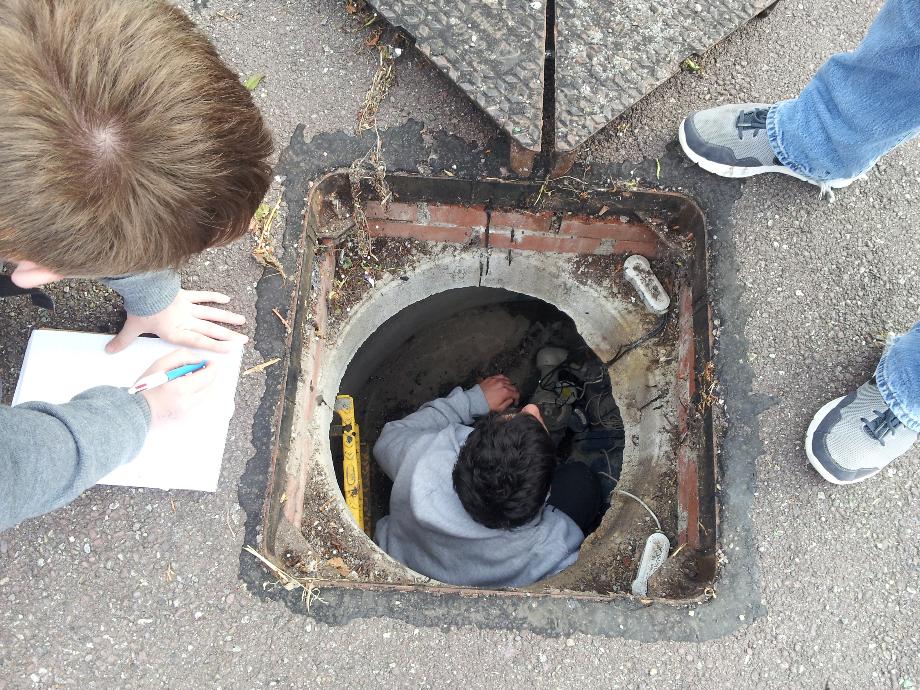
Students, with the help of the caretaker - Noel, entered the manhole at the front of the school. When we go down the ladder we read the digits from the meter and record them in our notebook.
The meter was read at the start and the end of school days and each week.
Water-based Cleaning Products
Environmentally Friendly Household Products
Window Cleaner
Ingredients:
* A tea spoon of ecover (available in most shops)
* Hot water
* Vinegar
* Bottle (to spray window cleaner)
* Bucket (to mix ingredients)
* Peppermint oil (fragrance)
Method:
1-Add the first 2 ingredients into the bucket
2-Pour into a spray bottle (add peppermint for fresh smell)
3-When cleaning use newspaper as it absorbs the cleaner and gives a better shine on windows
Floor Cleaner
* This is an eco-friendly floor cleaner, which contain all eco-friendly ingredients.
* Some of the ingredients include:
1. Vinegar
2. Peppermint tea-bag
3. Baking Powder
4. Luke warm water
5. And to make it smell nicer we then added some peppermint oil.
* Once we made this we then went and tried it out in our school dining assembly
* We saw immediate results
An Interview with Mr. Hegarty
What was the project about and what did you do?
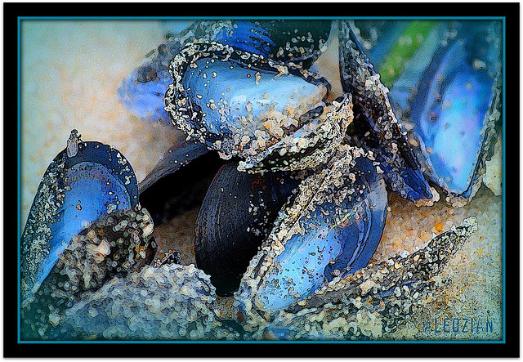
I was studying the health status of Blue Muscles by examining them and trying to find parasites and gill erosion. By looking at them then I could see how their gills were affected by bacterial infections. This was to do with sewage in the shore.
By looking at the parasites and gill erosion on the muscles could you tell how polluted the waters were in the harbour in Cobh?
Well, I could to a certain extent but the project wasn’t really about the waters it was about the muscles and how healthy they were and Cobh wasn’t the only site I did.
What other sites did you do?
I went around the Cork Area. I examined the muscles at Whitegate and Roches Point. I was surveying the health of muscles in Ireland as I collected them for examination.
Were the other sites as polluted as the Cobh Harbour?
No, they were a bit cleaner. There was no gill erosion there as there was in Cobh. Cobh was the most polluted.
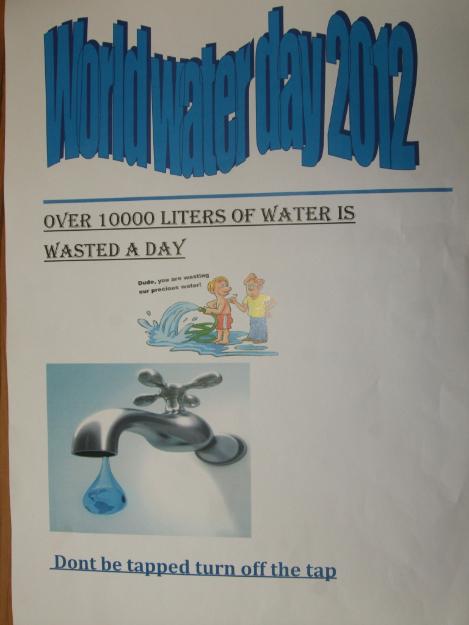
Poster Competition Results
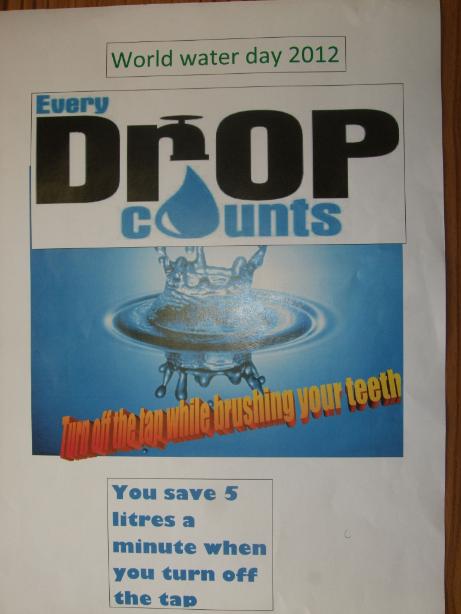
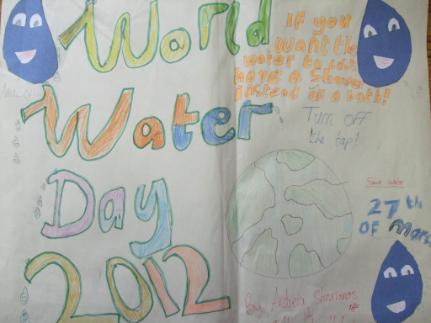
These are the winning posters from the poster competition about World Water Day. Thank you to all staff and students that contributed. There was a high standard of entries and the decision to choose the winners was a tough one.
Check back next academic term for further competitions.
Thank you to all organisations involved!!
Members of the Green-Schools Committee are issuing letters of thanks to organisations and various people who gave us a fantastic tour on Friday 4th of May. We learned a lot from the day and some brilliant blogs have been created detailing all the information we collected.

Lifetime Lab
We went to the Lifetime Lab in Cork to learn about the building and the way water was filtered in the City. We went into the lab and were informed about water being one of the most important things in life.
Water is treated by passing through sand to get rid of the bacteria the chemicals are put into the water to make it drinkable. Fluoride is put into the water help people’s teeth.
We were then brought outside to the old building where there was old machinery on exhibit. We watched a video about how water was treated many years ago. The video told us that workers started working from the age of fifteen and had to work many hours during the day.
We were given a tour of the engine room, the engines were the same typed used on the S.S Titanic but the Lifetime Lab’s engines are three times smaller than the Titanic. For more information click on the link below:
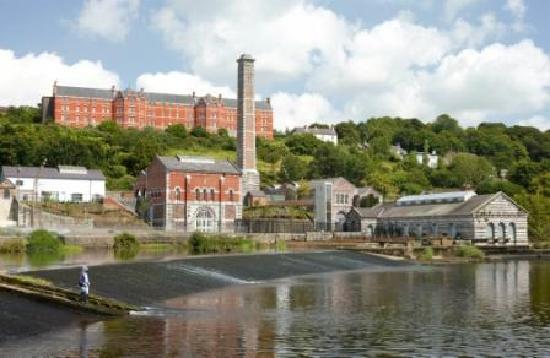
Inniscara Water Treatment Plant
On our trip to Inniscara Water Treatment Plant we first watched a video on the history of the water treatment plant. The information we gathered ranged from history of the plant to information on the water treatment process. The DVD Mr. Patrick Murphy gave us updated information on the water charge and how he recokens it will be done. A cubic meter consists of 220 gallons which equals to €1 per cubic metre and a cost of €1 for treatment. On average a household uses 140 litres per day, costing .80c a day equallying to a €300 euro a year charge (and an additional €40 charge for the maintence of the water metre)
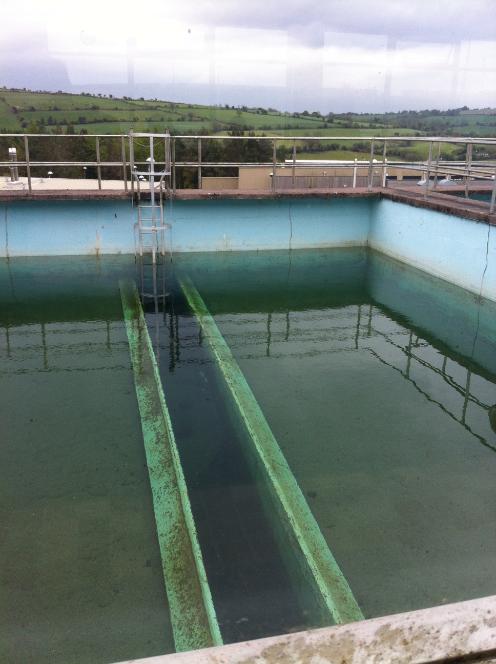
First, we learnt how water enters the plant. The plant takes in 7 million gallons per day. This water travels through 4 metre long concreate pipes to where they are stored in tanks which are 100 feet above sea level. There are four parts to the treatment process. 1) Pre-filtration 2) Sedimentation 3) Filtration 4) Post Filtration. We toured the plant in order of the treatment process.
Pre – Filtration
This is the first stage of treatment. The water is checked for foriegn bodies, raw materials (anything obvious floating in the water). The law requires that the plant does 52 tests before it is passed to homes all over Cork.
Sedimentation
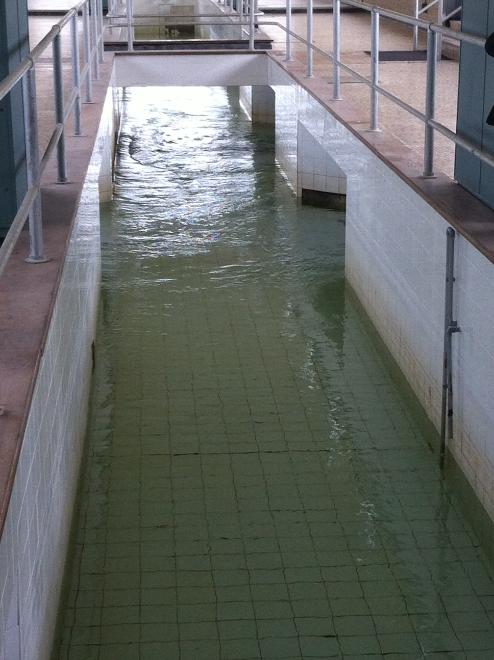
This is the second step in the water treatment process. Allows the water to go into a tank and to "set". The contaminates rise to the surface and the now clear water runs off.
Filtration
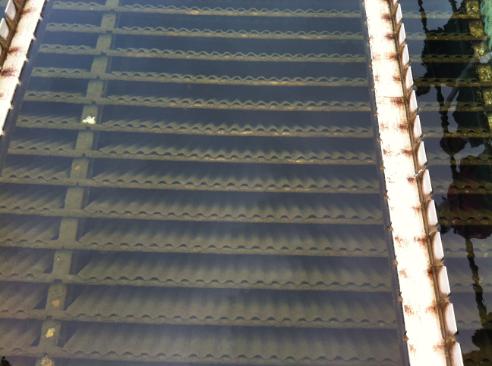
During this step the water goes into vast filter tanks. These tanks are made up of coarse sand, gravel etc. The water filters through these tanks. This process takes about ___ days. After a while the sand gets blocked. When this happens it is air-blasted. This is done approximately every three days.
Post - Filtration
These are the final steps of water treatment. Chlorine is added to cleanse the water. Lime is added to adjust the PH so that the water does not corrode the pipes of households. Finally Fluride is added as this is a legal requirment in Ireland.
Despite the fact the water is treated with Lime the copper cylinders in homes still need to be replaced every 8-10 years.
On the right are some pictures taken at various processes. Thanks to the students that made great use of technology on the day!
E.S.B Hydro Dam
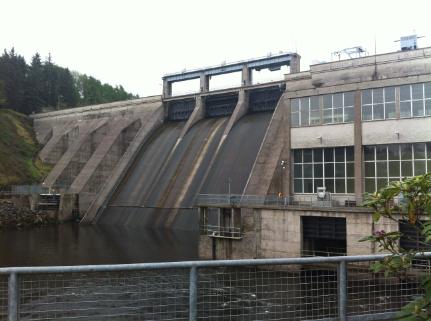
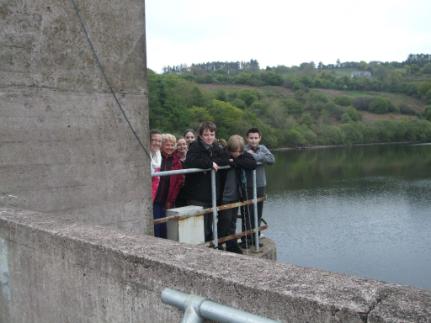
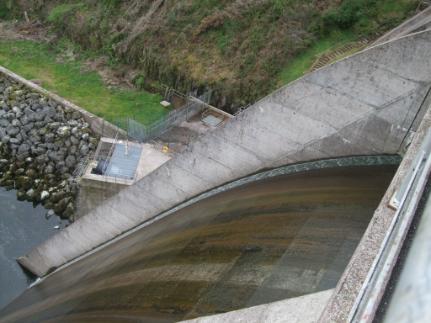
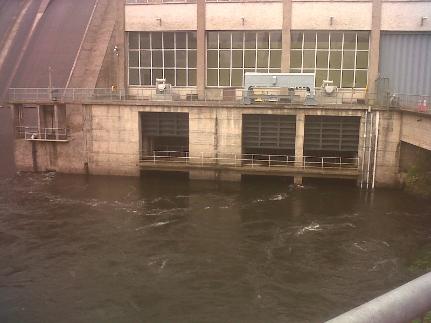
We arrived to the hydro-electric power plant by bus. The tour did not start until 10:15am so this meant we had time to take pictures of the dam while we were outside. A member of staffat the dam then explained to us thatthe water riffle we saw in the water was actually a fish pass. He also explained how the salmon travel up the fish pass annualy. The crest gates on the dam are over 60 years old. We were then brought inside to watch a DVD explaining how the dam was built and why the site was chosen. The average rainfall is 1500mm.
The requirements for the hydro electric dams are:
· A suitable facility for construction
· A suitable rock structre
· A river
When they were building the dam they flooded 3’500 acres of land to make room for the resevoir. Construction started in 1952. They put buttreses in the dam. The dams then became known as buttreses dam . The main dam in ireland is Ardnacrusha. In november 1956, the dam gates were lowered and thewater began to rise. The water head is measured atthe dam face. Inniscarra dam is 31 metres tall. They open the gates when there is no rainfall to produce energy. The water flows down pipes, into generators and then on to the national grid.Water goes from Inniscarra through a transformer to the national grid and it comes to our homes.
Alone 8 million gallons comes to Cork city in a day. Imagine how much comes in a week, a month and a year!
Inniscarra’s priority is public safety. They can measure a flood warning 6 hours in advance. This warning is then issued to members of staff in Inniscarra hydro electric power station. Cork is on an island making it prone to flooding
Salmon is the most affected out of all fish. Salmon pass through a fish pass. For this reason, a special fish catch was set up in 1971. We also learned that, the river Lee is powered by the sun’s water cycle.
We then were taken to an area called Le 1 area, which was near the control room. Our tour guide told us that the big generator in the room can generate up to 15 MW.
We were shown the control room where we met another member of staff. He told us many interesting facts.
We found out that, in September the fish pass is timed every 4 hours. Last April, the ESB only owned 30% of the electricity in the European market. ESB also changed its name to Electric Ireland.
Inniscarra uses up 3300 power sources, whereas, big power stations eg. Bord Gais etc. use up only 200. €4 is the amount for a MW of electricity. Power stations, such as Inniscarra, are manned up until 5pm. Until 5pm, there are 3-4 staff working. After that, one staff member works every evening. In the control room, they have a modern system and an old system.
On that particular day: - Head race = 47.66 metres
- Tail race = 17.08 metres
- Rainfall in Iniscarra = 39,772
In the event of flooding, if the water level reaches 150, they have to ring 60 people ie. Gardai etc. to tell them they are opening the crest gates.
The members of staff read the forecast 2 times a day by radar.
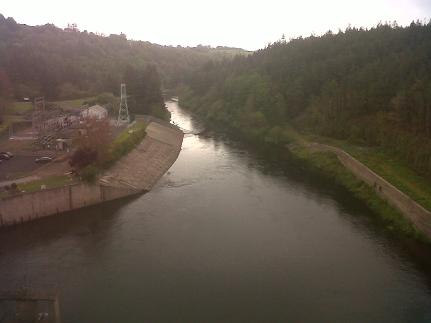
In 1987, 13,000 people worked in the ESB. Today only 6,000 people work there. Martin, who was the person talking to us in the control room, started in Inniscarra in 1987. Meaning he worked there for 25 years. We were taken to a high ledge just above the dam by another member of staff. He told us that we were 100 feet above ground level. As we looked down we could see that the lake could be used for fishing etc. our tour guide had told us that he had been working here for 35 years, which meant he started working here in 1977 and before we left he guessed the angle of the dam was about 60°.
Water Day Trip
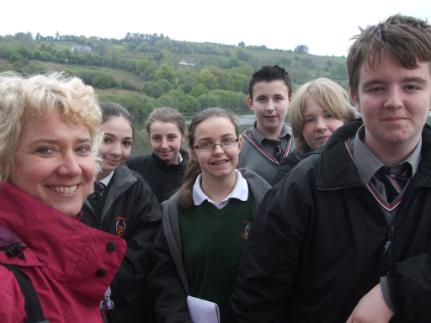
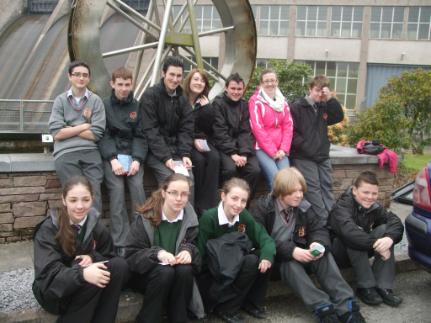
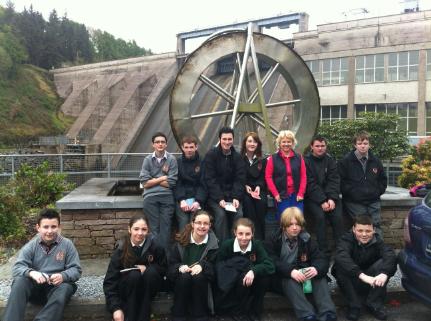
A huge well done to those students that represented Coláiste Muire at the ESB Hydro Station, Inniscarra; Inniscarra Water Treatment Plant and the Life Time Lab.
The day was jam packed with information and thanks must be sent to all those working at the above organisations. The day was fantastic.
Watch this section for blogs from committee members on the day.
UN World Water Day
As part of our preparations for World Water Day we used the resources provided on the UN Website. We are delighted to announce that they are now promoting our site and work on their facebook page.
Please follow the link below and like!

World Water Day: Morning Class
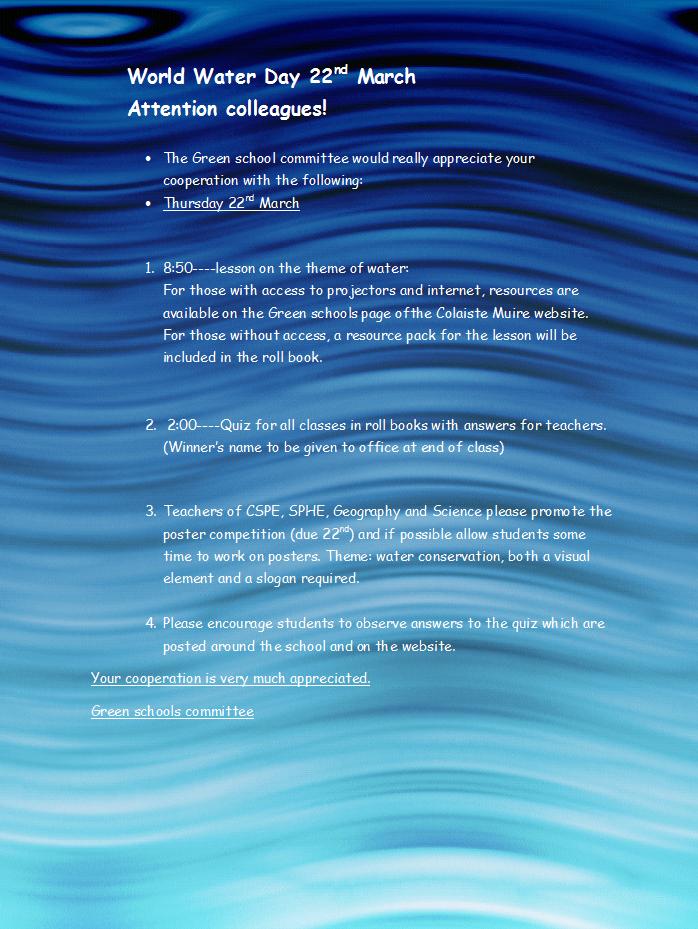
We made a quiz for World Water day to help people learn more about water conservation and how important it is. We realised we would need the help of the staff to run a lesson in the morning so we put a notice in the staff room which can be seen on the right.
We made a water information pack.
There was lots of interesting facts and statistics which
we took from a book provided by the Green-Schools
Programme.
We put it into every teachers roll book and attached
instructions for the staff. We included the Green Schools website address in the pack to promote our website.
There was also a C.D. ROM included. On the C.D. there was a Power Point with tips to save water and facts regarding the water saving devices in school.
There was also some activities for the class to do such as creating a water cycle diagram, discussing how water is used for play, at home and at work. Then students were asked to talk about things that harm water sources and the affects on the environment.
The pack and PowerPoint included information about
devices and strategies that have taken place in school in order to reduce our water consumption.
The Green-Schools would like to send a huge thanks to
all staff and students that participated in the lesson.
Without your involvement the day would not have been possible and it was a success!
WORLD WATER DAY MORNING CLASS: How we created the Power Point Presentation
We prepared a Power Point Presentation for educating the whole student body.This is how we did it.
- From a Google search we found a Power Point on the subject of water conservation and the water cycle.
- Then we downloaded this presentation and started to edit it including various videos, photos and “tap tips”.
- We included facts about our school and information on the new dual flush toilets.
- After that we burned this Power Point onto a C.D. and gave one to each teacher. Also, we uploaded the Power Point to the website (which is freely available to download.)
- The teachers then went through this with their students at the 8.50-9.30 class.
- Some staff members have stated that they will use the PowerPoint again in future lessons such as Science.
Feedback from students was positive and we're looking forward to creating future resources for the school.
World Water Day Afternoon Class
After the presentation in the morning the students had been well educated for the quiz in the afternoon. They also had the chance to walk around the Water Mile to make sure they knew the answers to the quiz. At the 2 O’ clock class the teachers were given the quiz inside their roll book and each student particapated in the Green Schools water quiz which had 20 questions. After that, each teacher corrected the quiz and the person with the most correct answers got their name sent to the office. The people with the highest results will be given prizes of One-For-All vouchers next week. Happy spending!
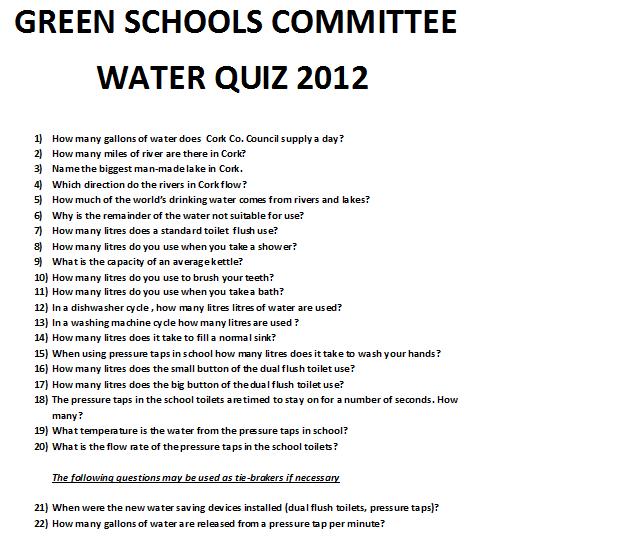
If you would like a copy of the above quiz please e-mail the committee cmuiregreencommittee@hotmail.com
These are the winners of the Green-Schools Water Quiz & Poster Competition
Results of water survey
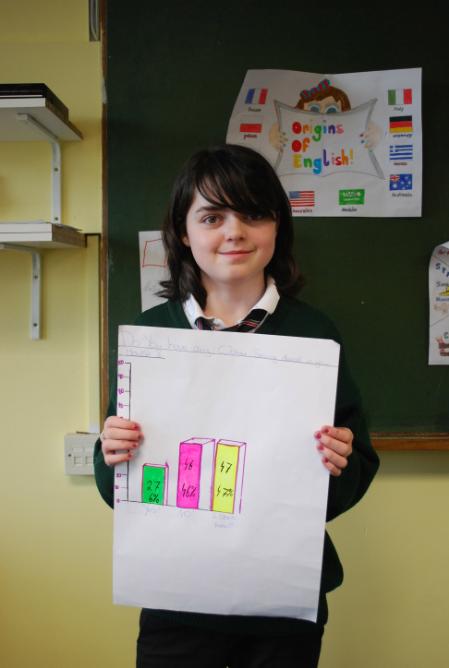
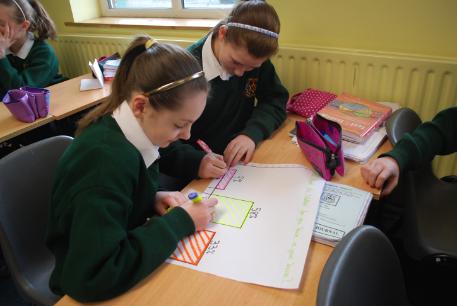
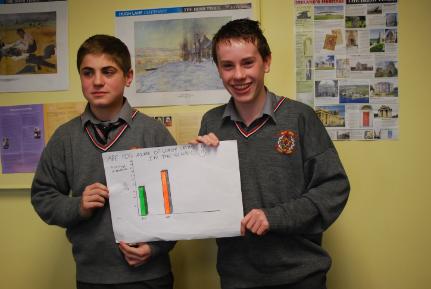
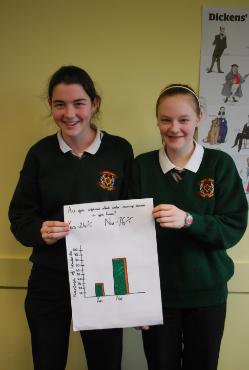
Ms. Kelleher's Maths class created some fantastic posters that are on display around the school.
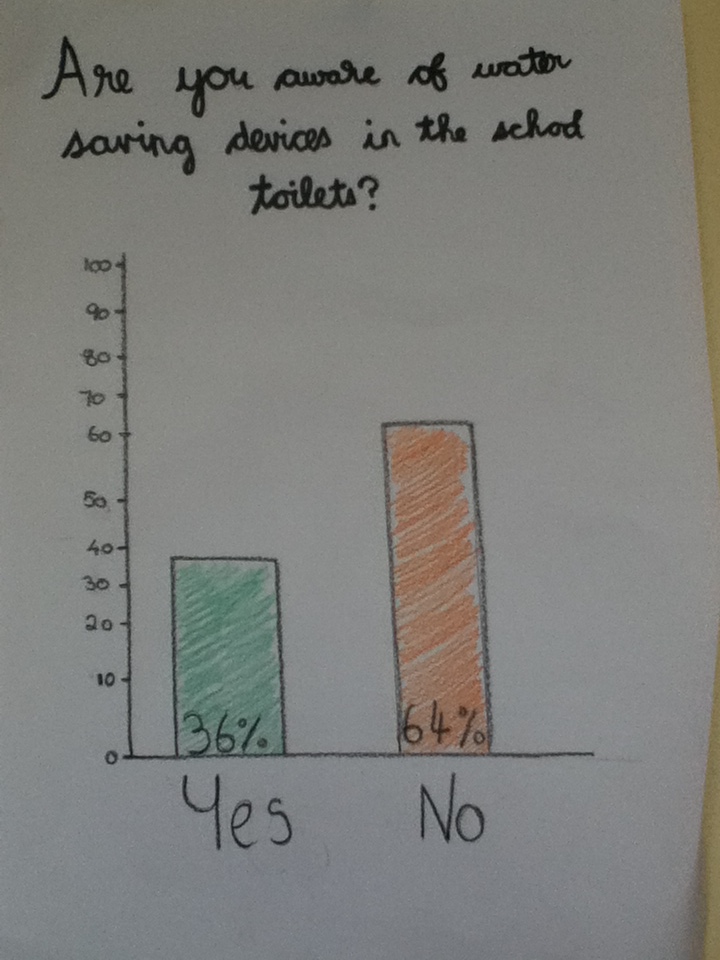
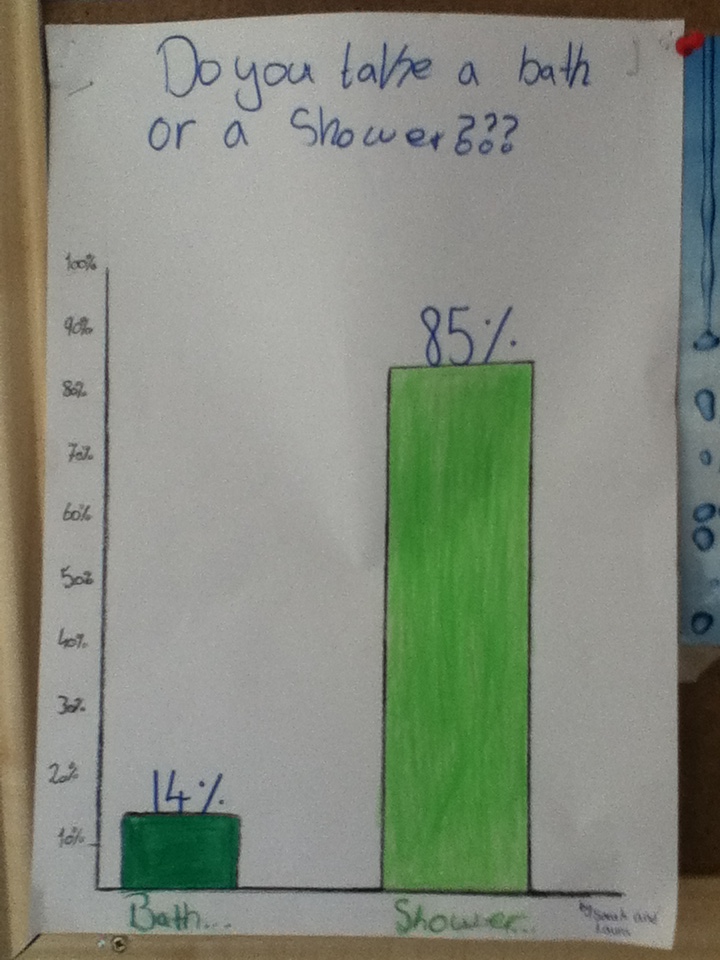
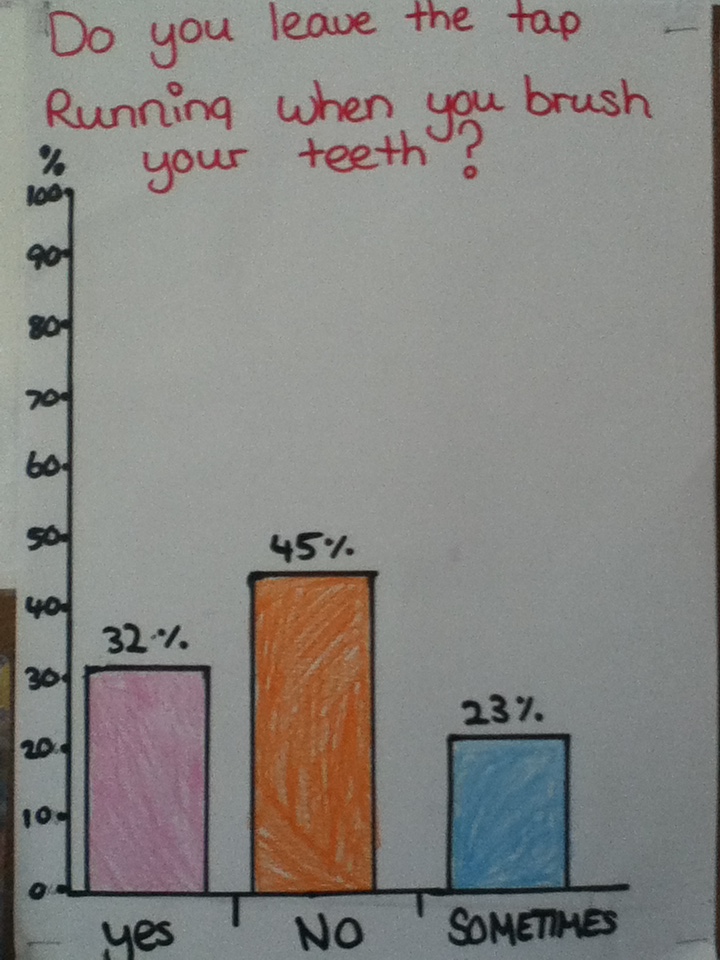
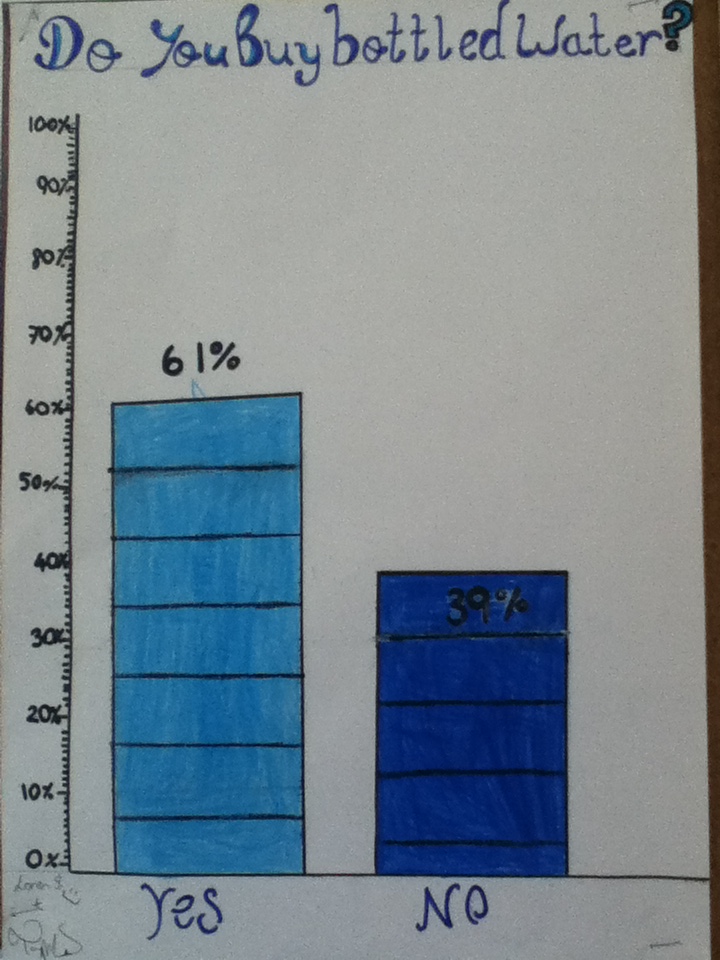
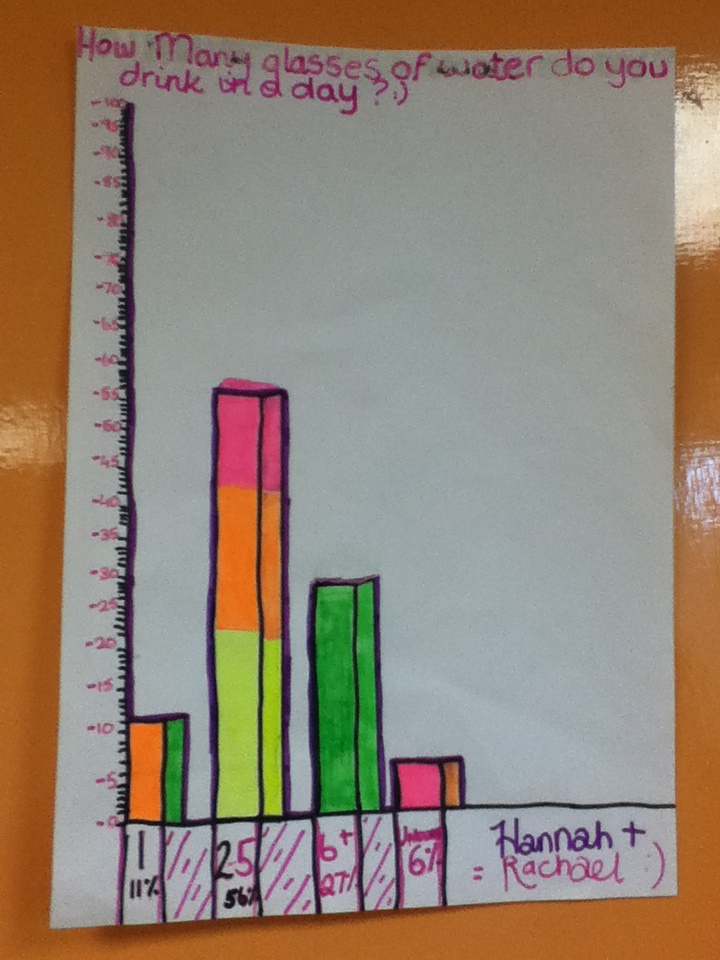
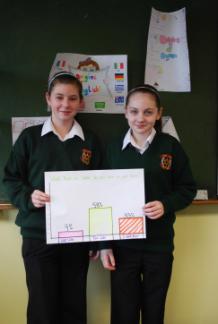
Students created bar charts using the results from the surveys. On the right are pictures of the finished pieces.
Below are some of the results from the survey. The Committee hopes that World Water Day will create greater awareness of ways to conserve water and the water saving features that are in place in the school.
- We found that 15% of the school community take a bath and 85% take a shower.
- 32% of people leave the tap running while brushing their teeth, 45% do not and 25% leave the water running sometimes.
- A staggering 61% buy bottled water.
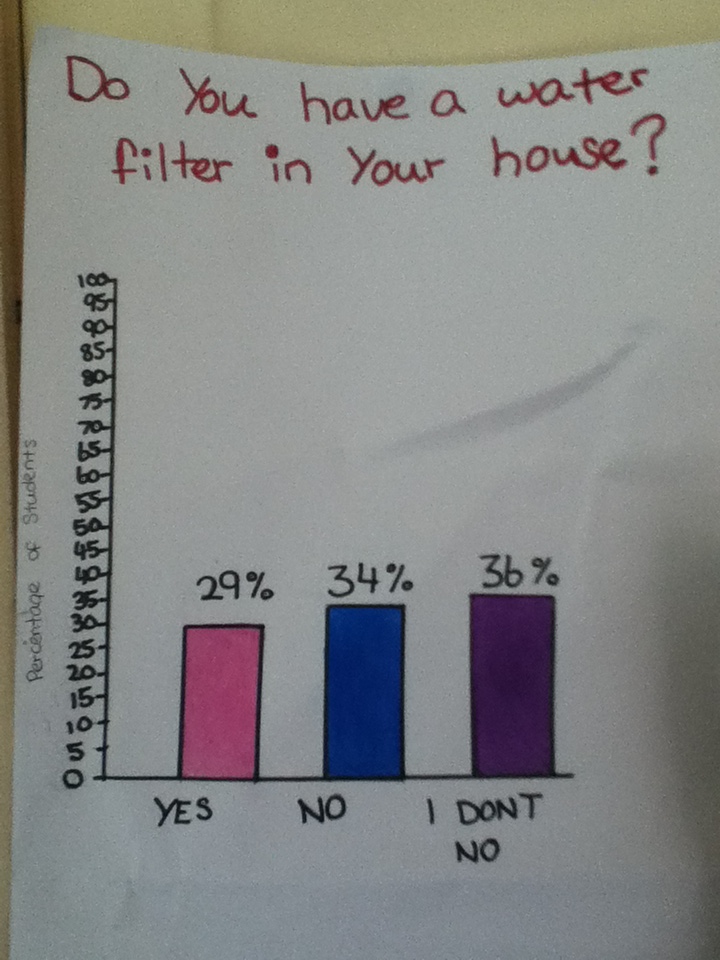
- 29% of people own a water filter while 34% do not have a water filter and 36% do not know.
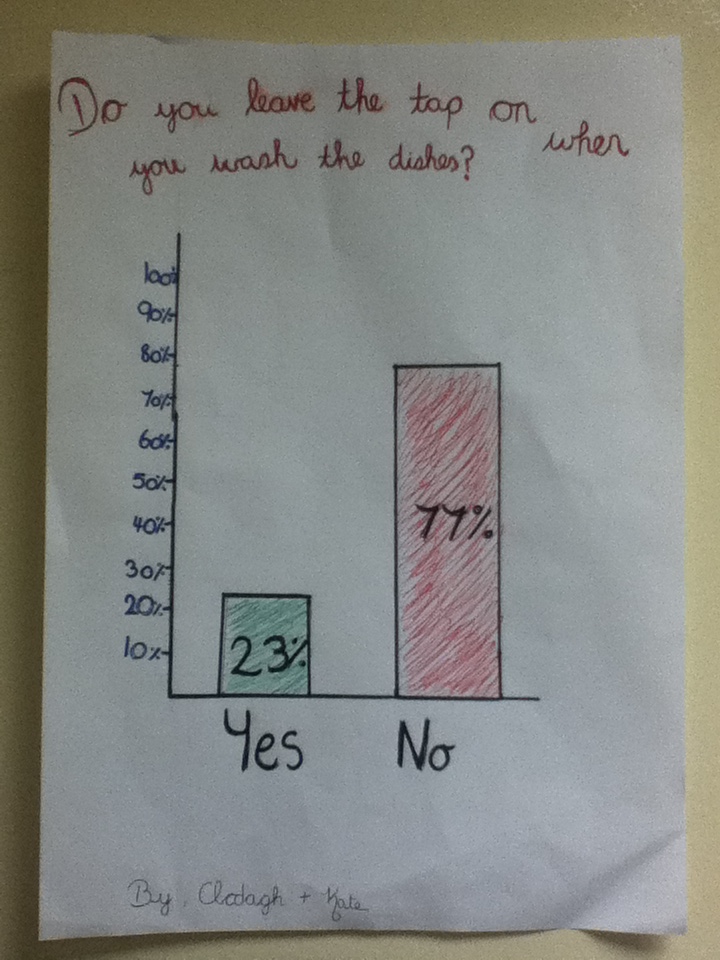
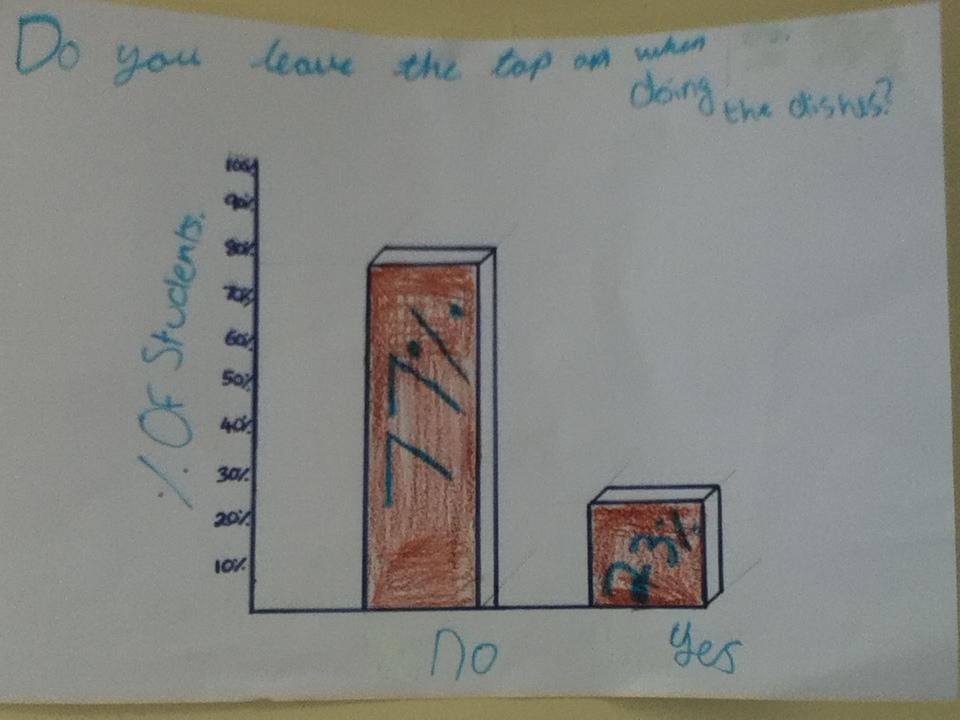
- 23% leave the tap on while washing the dishes and 77% do not.
- 35% know about the water saving devices in the school and 65% don't know.
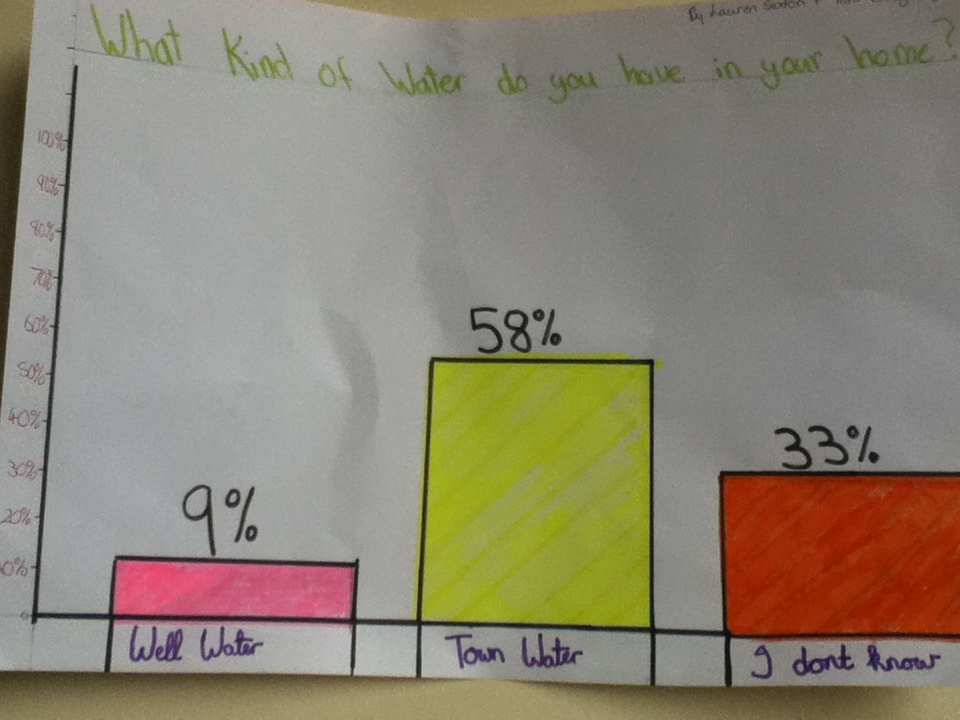
- 9% have well water, 58% have town water and 33% don't know .
- 11% of people drink 1 glass of water a day, 56% of people drink 2-5 glasses a day, 27% drink 6+ of glasses a day and 6% don't know how many glasses they drink a day.
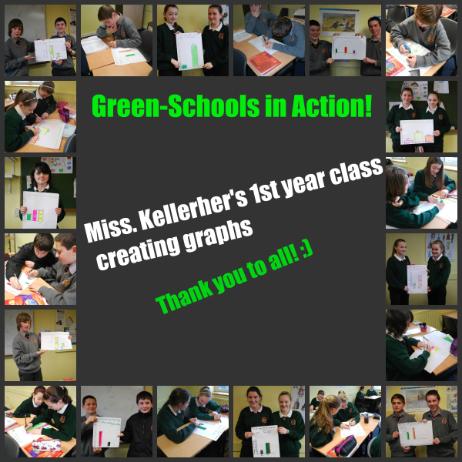
Keep an eye out in the corridors for these graphs.
The top three will be displayed on the Green-Schools notice board.
Resources for teachers: World Water Day
A pack will be made available to all teachers in roll books. These packs will include instructions for the class. A C.D. Rom with a Power Point Presentation will also be made available to staff.
Here you will find resources that can be used during the 08:50 lesson on Thursday 22nd (wordsearch, power points, links to useful sites and short, informative clips.)
A notice has also been placed on the staff noticeboard. In the mean time if you've another other questions talk to a Green-Schools Committee member or drop us mail at the usual address.
As always, we must thank everyone for their continued support. Without the co-operation of staff and students this day would not be possible.
Many thanks,
The Green-Schools Committee.
World Water Day PowerPoint
Click on the link on the right to download the PowerPoint Presentation. This can be used in class during World Water Day. Remember, many of the answers to the afternoon quiz are within this lesson!
Below are additional resources that work well with the lesson. Thanks to the UN World Water Day website for these interesting videos.
For those of you with suitable resources, please do not hesitate to get in contact with us at the usual e-mail address;
cmuiregreencommittee@hotmail.com

|
Final draft water ppt.pptx Size : 1504.88 Kb Type : pptx |
Toilet posters
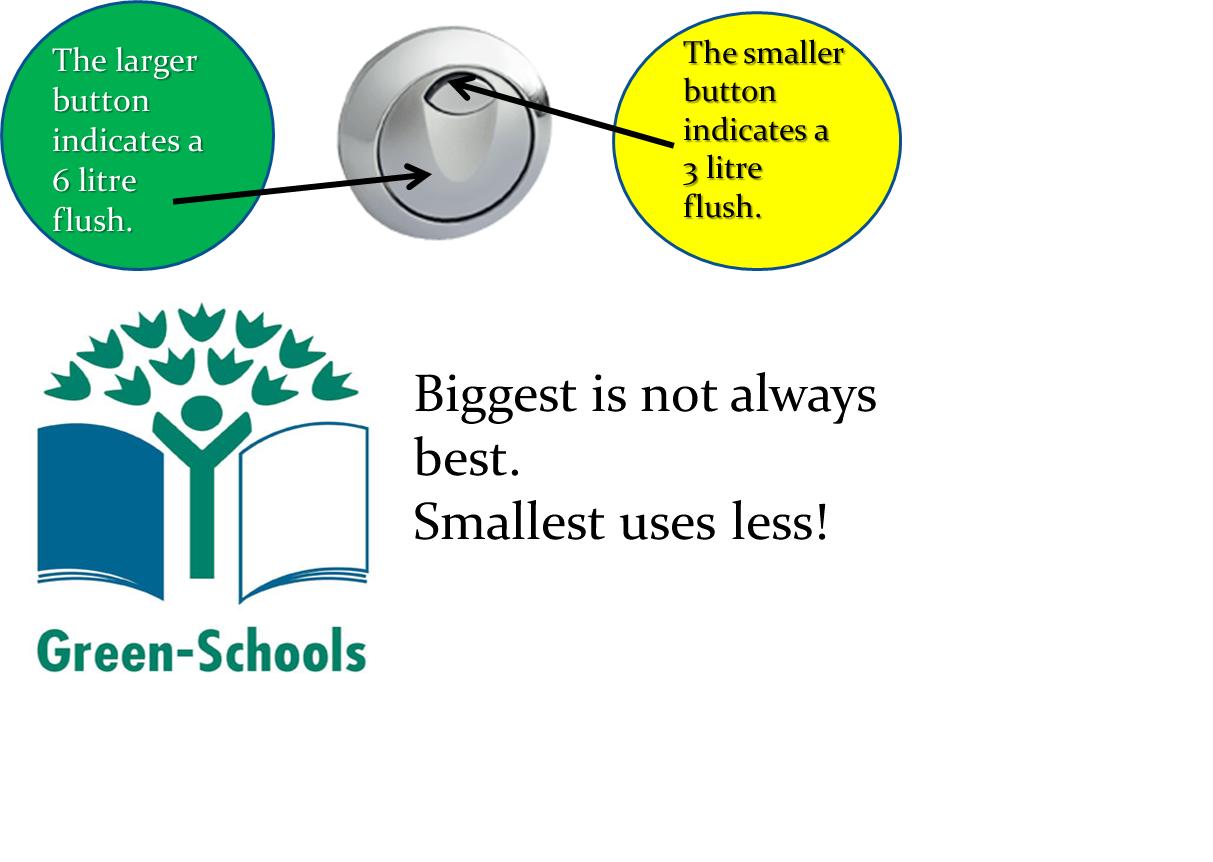
The Committee have designed new posters for the toilets aimed at informing staff and students about the water saving features that are in place.
Let us know what you think.
Suggestions are always welcome!
Bar Charts
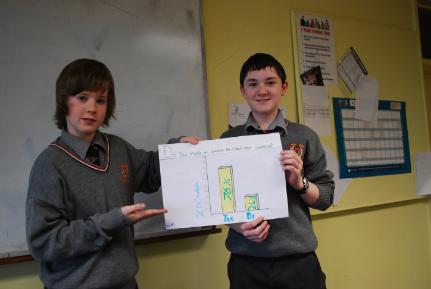
These are the bar charts that were created by the first year students after compiling the data from the whole school survey. These are on display throughout the school. Impressive work by all that took part. Well done!Compilation of Water Survey Tables and Graphs
A massive thank you to Mrs. Feehan and the T. Y. Science Group and Miss Kelleher and the First Year Maths classes. All worked very hard at collating the data with Green Schools Members.
Informative and colourful graphs have been created and soon will be on display in the corridors of Cólaiste Muire.
We hope that after Water Week people will have greater awareness about their contribution to the conservation of water.
Water Mile Facts
- Cork County Council supplies over 32 million gallons of clean drinking water every day.
- There are over 750 miles of rivers in County Cork.
- Inniscarra lake is the largest man-made lake in Cork.
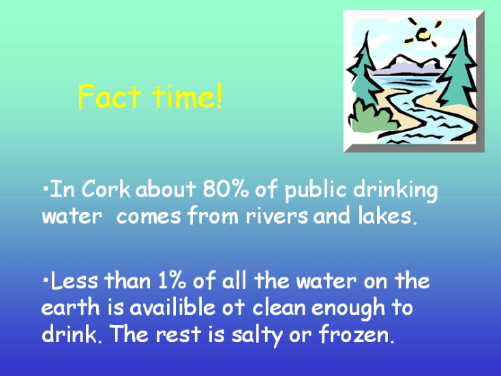
- In Cork about 80% of public drinking water comes from rivers and lakes.
- Most major rivers in Co. Cork run from west to east
- Much more fresh water is stored underground in aquilifiers than on the earths surface.
- When you use the toilet you use 9 litres of water. (when in school - it's 3 litres for the small button flush and 6 for the larger).
- When you wash your hands you use 2 litres.
- When you fill the sink you use 4 litres.
- Less than 1% of all the water on the earth that is available is clean enough to drink. The rest is salty or frozen.
- Gougane Barra lake is the source of the river Lee.
- The total amount of water on the earth is about 326 million cubic miles of water.
- The average person in the United States uses anywhere from 80-100 gallons of water per day.
- Flushing the toilet actually takes up the largest amount of this water.
- When you take a bath you use: 80 litres;
- When you use the toilet you use: 9 litres;
- When you wash your hands you use: 2 litres;
- When you fill the sink you use: 4 litres;
- When you brush your teeth you use: 1 litre;
- When you fill the kettle you use: 1 litre;
- When you take a shower you use: 35 litres;
- When you use the dishwasher you use: 50 litres;
- When you use the washing machine you use: 95 litres;
A shower, bathroom tap, toilet and kitchen sink use two to five gallons a minute.
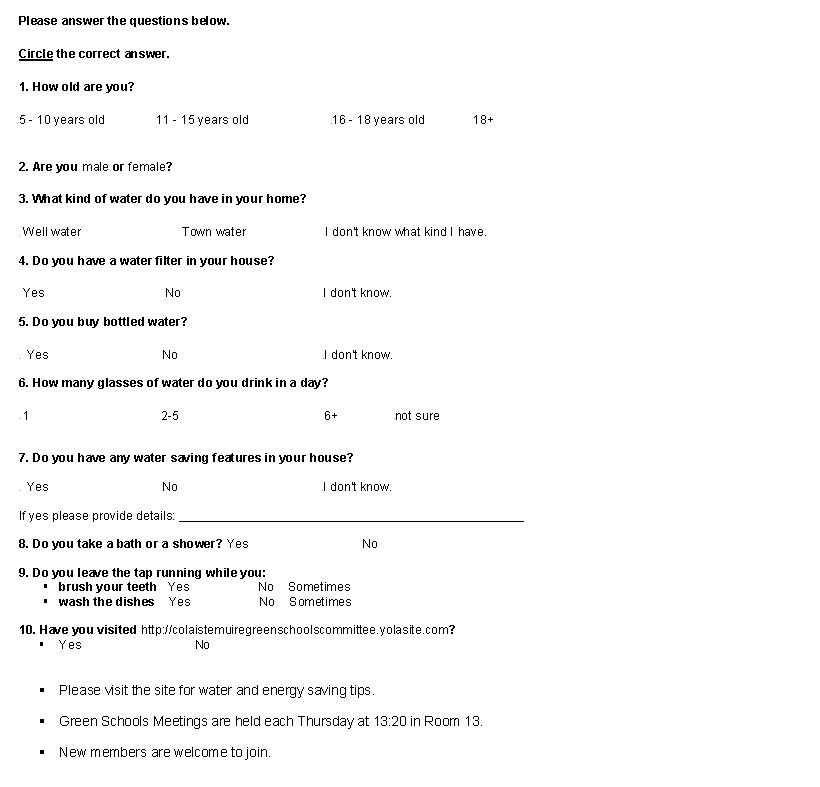
Water Survey
The Committee has created a water survey that will be conducted with staff and students.
With the results graphs will be created that will be displayed on site and in school.
If you would like a copy of the survey which can be completed and submitted electronically please email:
cmuiregreencommittee@hotmail.com
Thanks to all participants!
Water meter reading graphs
|
|
Start.docx Size : 25.432 Kb Type : docx |
|
|
water readings.xlsx Size : 15.378 Kb Type : xlsx |
|
|
Book1.xlsx Size : 14.122 Kb Type : xlsx |
|
|
GREEN THING.xlsx Size : 16.557 Kb Type : xlsx |
Eco Eye and Water
This episode looks at drinking water and the effects of industry on supply.
Duncan visits one of Ireland's most polluted industrial sites at Haulbowline Island in Cork.
Duncan talks to Paddy Nolan about the modern licensing system to prevent industrial pollution happening again.
He also talks to Kieran O'Brien from EPA Office of Enforcement about what happens when things go wrong in industry and what role the public have acting as the eyes on the ground.
Water Conservation Word-search
The members of the Green Schools Committee have been busy creating more valuable resources for teachers.
This wordsearch aims to introduce the water conservation key words.
If you would like a copy e-mail the Committee at:
| cmuiregreencommittee@hotmail.com |
| precipitation | |
| condensation | the water cycle |
| evaporation | water butts |
| green schools | water flag |
| hippo bags | water meter |
| locate leaks |
Bottle or tap?
The video on the left addresses some key issues when it comes to bottle and tap water.
Over five minutes, the film explores the bottled water industrys attacks on tap water and its use of seductive, environmental-themed advertising to cover up the mountains of plastic waste it produces.
The film concludes with a call to take back the tap, not only by making a personal commitment to avoid bottled water, but by supporting investments in clean, available tap water for all.
Do you take your water supply for granted?
• A five-minute shower with a standard showerhead uses 100 L of water.
• A five-minute shower with a low-flow showerhead uses 35 L of water.
• About 75% of indoor home water use occurs in our bathrooms, and toilets are the single largest water users. Toilets use over 40% more water than needed!
Water at home
What do you do to conserve water at home?
- Check for leaks (taps, toilets and pipes)
- Take shorter showers
- Turn off the tap after you wet your brush
- When washing dishes by hand, don't leave the tap running
Water Saving Action
To save water we have:
Implemented new water saving measures
- New taps that turn themselves off
- Pressure controlled toilets
- Water butts are being donated to the school by the Cobh Tidy Towns